
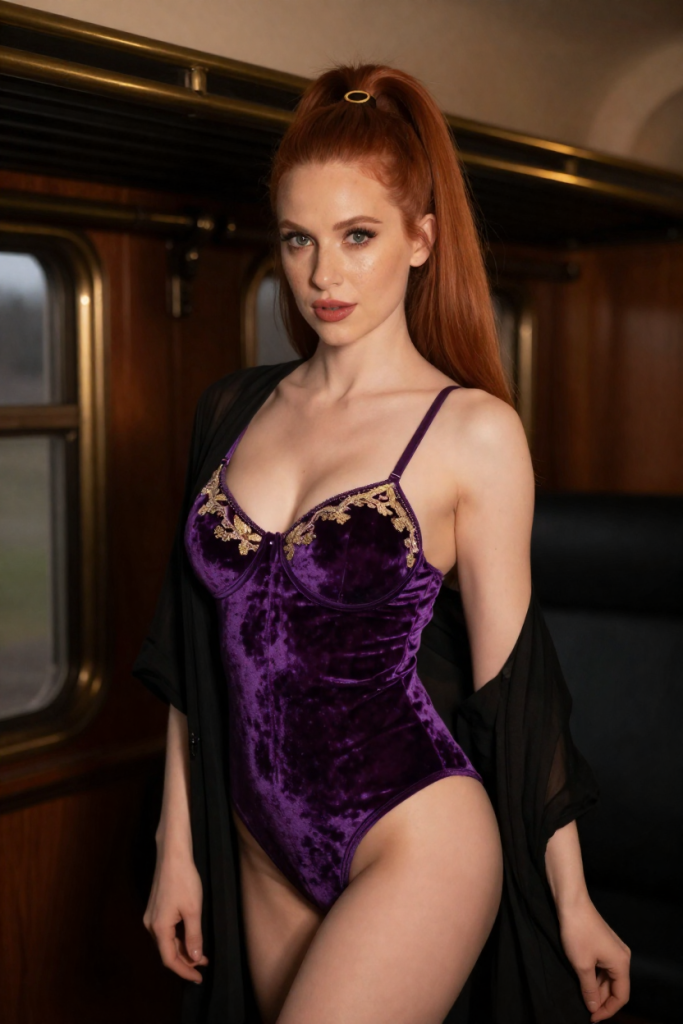
Series drift is usually blamed on the model, the way a bad bearing is blamed on the instrument. Check the field log instead. The character was described from memory at every job, and memory edits as it goes: “long copper hair” in the first frame becomes “flowing red locks” three frames later, and the audience watches a stranger quietly take over the set. The repair is clerical, not technical. Write the character down once, on a card you paste rather than retype — a survey the rest of the route is plotted against.
Five fixed entries, always in order
A working survey card holds five things. Age — a number, always 25 or over. Hair — colour, length and one habitual style. Build — two or three words, no more. Face — one or two details that endure every crop. Signature — the mole, the ring, the mark that survives even a tight frame. Everything else belongs to the variable line: outfit, room, hour, light, pose. Variable lines are meant to change at every job. Card entries are not.
Two habits keep the survey honest over a long series. Entries are stated plainly and positively — “long copper-red hair in a high sleek ponytail with a gold ring tie” survives generation, while “beautiful hair” is reinterpreted at every attempt. And the card is versioned. When the character is deliberately changed — a new cut, a new signature — the new text is saved as version two with a date, so an old set can still be remade exactly as it was first charted.
Working from the survey
Production then becomes a calm routine. Pair the card with variable lines that share one setting and one light, and generate the set at the standard model’s 6-credit cost. Keep the best third. Spend on repairs, transfers and upscales only after the cull. When a frame returns off character, the cause is almost always visible in the log: a variable line contradicted a card entry, or an entry was too vague to hold a bearing. Both are fixed on paper, at the desk — not by hunting through settings at the tool.
What a survey cannot do
It cannot hold a character who was never decided. If the entries are adjectives — lovely, striking, perfect — no system on any route will keep her, because there is nothing fixed to plot against. Decide her on paper first. The survey card is not where the imagination happens; it is where the imagination is kept, frame after frame, so that months from now a new frame in the series can still be plotted against the very first one and found to be the same woman.